
Does your recruiting include transfer students?

So much of international student recruitment is concerned with attracting new students from their countries of origin, but what about recruitment from within the very significant populations of international students already engaged in some level of study abroad? Students, for example, who are currently studying English as a Second Language in preparation for an academic programme. Or those who began their studies at a community college and will need to transfer to a university to complete upper-level degree requirements. Or simply those students with evolving study plans or interests that will need to transfer to an additional institution in order to pursue the major or programme of study they want. Each of these groups has compelling reasons to change institutions as their programmes of study unfold, and each represents a significant and growing opportunity for enrolment growth.
Targeting transfer students
Partly as a function of increased competition, and partly due to an increasing awareness of the opportunity, more institutions are now adapting their recruitment efforts to better target transfer students. This often means introducing new orientation or support services for incoming transfer students, providing specific admissions and liaison services for students transferring from other institutions, or development and promoting formal transfer programmes or links between institutions. The degree of student mobility among institutions can be surprising. One large-scale study of 2.8 million students in the US found that one-third of all students change institutions at some point before earning a degree, with 37% of transfer students changing institutions in their second year and a surprising 25% transferring more than once. This inter-institution mobility is increasingly enabled by formal articulation agreements between junior or community colleges and universities (or between ESL institutes and post-secondary institutions) or even by large-scale, systemic articulations such as those that have been adopted by a number of jurisdictions in Canada. For example, Canada’s westernmost province, British Columbia, has a long-established . The system encompasses all colleges and universities in British Columbia and provides ready credit transfer guidance for students moving from one institution to another. Research in the field, however, suggests that students are not often aware of such transfer opportunities - or at least do not always understand them clearly - and this suggests in turn a need for more targeted promotion of any such articulation programmes to prospective students.
“Admission processes often lack transparency and the perceived complexity of transferring evidently prevents many students from attempting this path,” notes an excellent, related post on the Higher Education Marketing . “Many universities seem to incorrectly assume that applicants are aware of transfer credit options and do not emphasise this in marketing materials. Universities that make it easier to understand the transfer process and provide transfer credits will be at a competitive advantage for this enrolment source.”
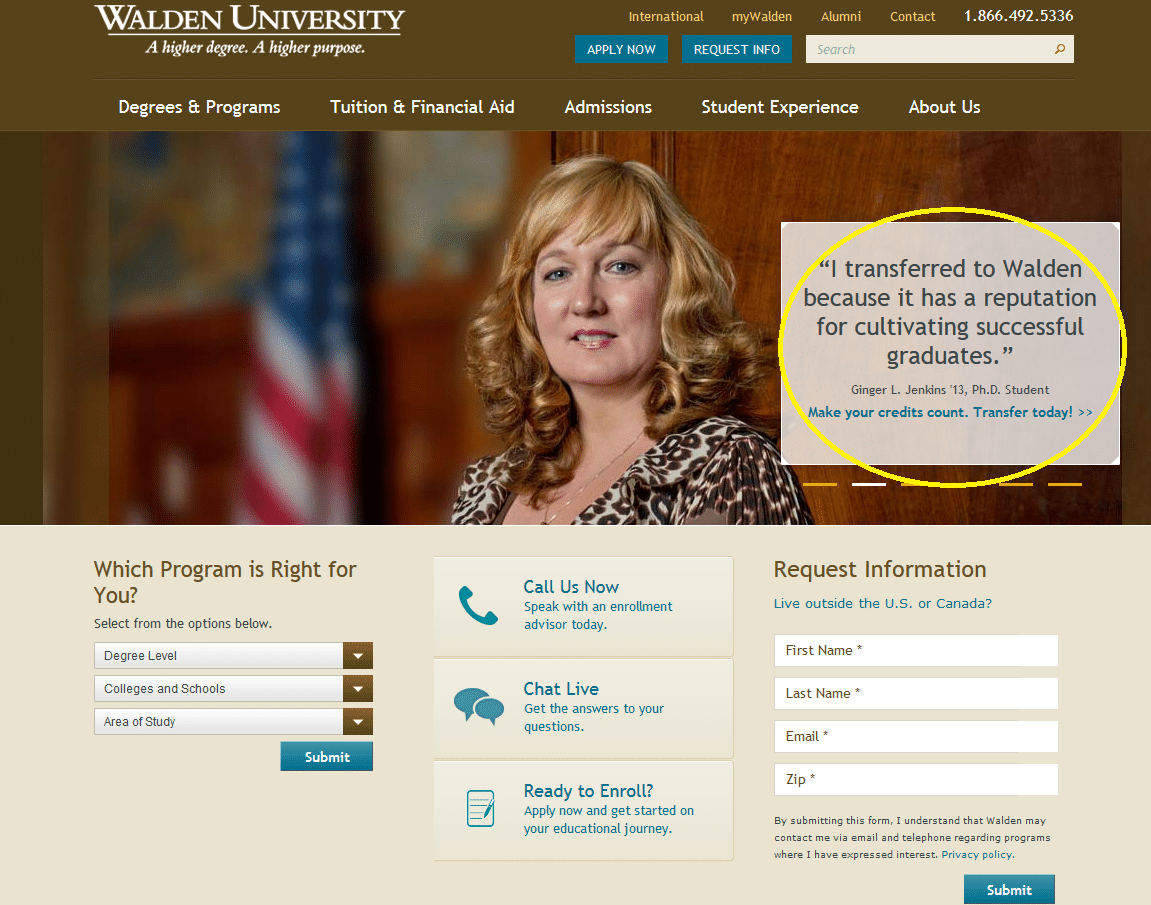
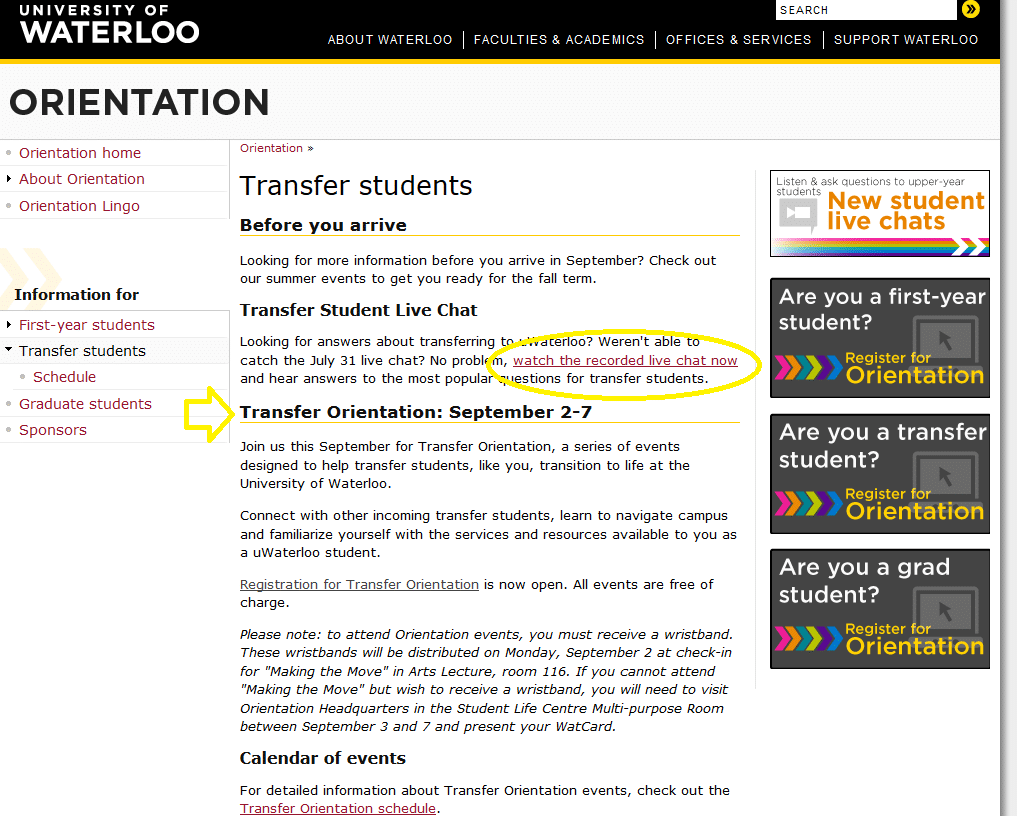
The same post on Higher Education Marketing notes the importance of effective messaging and calls to action for transfer students on recruitment websites:
“Keeping in mind that these students don't follow one single path to the application process and often aren't exposed to key messaging received by [new prospects], your website may be their first contact with your university to determine whether you are transfer-friendly.”
The post provides a number of compelling examples, including those shown below from (featuring a clear call to action for transfer students) and the (dedicated orientation and mentoring services for transfer students).
Best practice tips
A related item on the always-insightful Noel-Levitz blog provides a handy 10-point checklist for institutions aiming to more effectively recruit and retain transfer students. Some of the recommended questions and areas of review from this checklist include:
- Do you have dedicated admissions staff who are trained to respond to transfer student issues?
- Are your current processes transfer-friendly?
- Do you have dedicated resources on your website for transfer students? If so, are they easy for transfer students to find?
- Do you have effective orientations and intakes for transfer students?
- Have you adequately communicated your willingness and eagerness to accept transfer students on your campus?
“If you make your transfer student recruitment more systematic and strategic while being deliberate about building a user-friendly environment for transfer students,” the Noel-Levitz post observes, “you will lay a solid foundation for enrolment growth.” What is perhaps most striking about the examples and ideas shown here is that - perhaps with the exception of the formation of new inter-institution articulation agreements - they do not represent significant new investments in processes or incremental recruitment efforts.
In many respects, they amount to simply recognising the opportunity that transfer students represent, adapting your marketing communications to explicitly address those students, and demonstrating your interest and willingness to welcome them.
Are your recruitment and admissions processes transfer-student ready? Please tell us about it by adding your own examples of successful transfer recruitment strategies in the comments below.







